
Dragoncello is a perennial thick aromatic plant that can reach a meter in height. It forms a tuft of fine stems that branches. The green leaves are lanceolate. They are tight and have the shape of a spear. Dragoncello, in the same way as artichoke, chicory and lettuce, It is part of the Asteraceae family.
The scientific name of the Dragoncello is Artemisia Dracunus. It is also called a blow or grass to the dragon. To differentiate it from the cousin «The Dragoncello of Russia», ARTAMISE DRACULULULULOIDES, It is also called «true dragoncello» or «French dragoncello».
History of plants
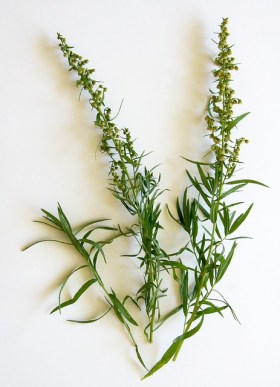
The history of the Dragoncello has different divergent versions:
The first version claims that the plant has found its origins in the steppes of Asia, more precisely in Siberia and China. From there, it was introduced to the Middle East where it is called «Atroun». So the name has undergone a deformation and changes in «Targon». Over time, he has turned into «Dragoncello».
The second version states that they were the crusaders who, having appreciated the medicinal virtues of this plant, would report it from the Middle East. In fact, many diseases should treat and even treat snake bites. It was therefore called » Draunculus « Which means «little dragon». Over the years, the name has become «dragoncello».
Some specialists assume that the dragonce may also come from Greece because the Greeks have already cultivated it. In these times, the Dragoncello is said to be useful against the snake bites. In addition, the word «dragoncello» comes from the Greek «drakon» which means «dragon» or snake.
A completely more probable version attest to Central Asia. Thanks to the Crusaders, it arrived in Europe in the Middle Ages.
How to cultivate dragoncello?

It is relatively easy to cultivate the dragoncello, in the ground in a vegetable garden or in a pot. But for the best results, Some conditions must be respected:
- This plant highly appreciated throughout the Mediterranean basin it cannot bear the cold of the continental climate. In winter, it must be preserved by the frost, dry in a pot. In the garden, it can be protected by dense mulch. Therefore, the tufts can persist for several years.
- After the frosts, the plant must be installed on the ground heated, in full sun.
Sowing of dragoncello seeds

There are two ways to sow Dragoncello seeds:
- Sowing under the hot shelter with a temperature which can vary between 18 and 200C must be done at the end of winter or early spring. For this type of sowing, use a sowing plate or small buckets. Licking the earth by mixing the ground with 25% of sand and fills each accommodation with this mixture. Put the seeds in a hole in a deep centimeter, then cover them with the light earth. Once the seeds are kept, spray regularly to the germination.
- Sowing in the ground has been reachable since mid -May, when the gels have certainly passed. The seeds will be buried below 1 or 2 centimeters of soil. Therefore, they should be regularly watered in the rainwater until lifting. Dragoncello seed lifting can take up to two weeks.
For a better arrangement of plants, The ranks will be spaced by 20 centimeters.
To allow the plant to develop well, it is necessary to leave space and lighten about 20 centimeters. This, as soon as the first 4 or 5 leaves train.
About 6 or 8 weeks after the maturation of young semi -selected plants and can be transplanted.
Vegetable tarragone from the stems

Dragoncello can be planted in April or May, that is, in the spring when any risk of jelly is fired.
Before proceeding with the cultivation of the dragoncello in a vegetable area, it is necessary to prepare the ground well. It is therefore necessary, for any culture, to start with plowing. With a spade, He reports the earth to a depth of about 15 centimeters. Before the correct ground, the earth must be flat and fine. So you have to break the clods.
To improve the soil, whether for a cultivation in the open soil or in a pot, add the soil. For a vase cultivation, it creates a 50%mixture of land/land. If you choose cultivation in the ground, the ground will be 30%. If the earth is not very heavy, you can also add some sand.
Then place the dragoncello's feet. Do not throw the rest of the earth/soil mixture. Fill the holes with it.
Finally, You can tamp and water.
Dragoncello prefers relatively light and well drained soils. So it doesn't need a lot of water. It is only in case of great drought that must be watered.
There are three methods to cultivate dragoncello: The division of tufts, cut and sponsorship.
- The TUFT division
When he carries out a foot of the dragoncello, you have to leave the ground around the roots. Divide the tuft with a spade. Each of the parts obtained must obviously have roots. Divided plants can be transplanted immediately. To develop normally, put a space of 50 centimeters with each other.
- Cut
In summer, select some branches on a healthy foot of the Dragoncello.
Choose green and woody branches of about 10 centimeters. Fill a pot of plantation land. Plant the stems you have chosen in this pot. Put everything outdoors.
As you know that this plant fears winter gelatin, the vases must be returned during the winter. Once the winter season has passed and that spring comes, the cuttings that have the buddown can be planted in the ground.
- Stew
Choose about fifteen centimeters. In the ground, it digs a hole of about 5 centimeters in depth. Put the dragoncel stems, lengthwise. Make sure that the end of each rod is not buried. Then cover the hole with the land of the vegetable garden. This method is also called «sleep manifestation».
All this operation must be performed in the spring.
When autumn arrives, it is possible to remove the stems and plant them in the place of your choice
As for the fertilization of the Dragoncello, know that drug addicts are generally less tasty. Therefore it makes no sense to put the fertilizer. However, the contribution of a small compost during sowing and every spring is in favor of the plant.
How to maintain a dragoncello plantation?
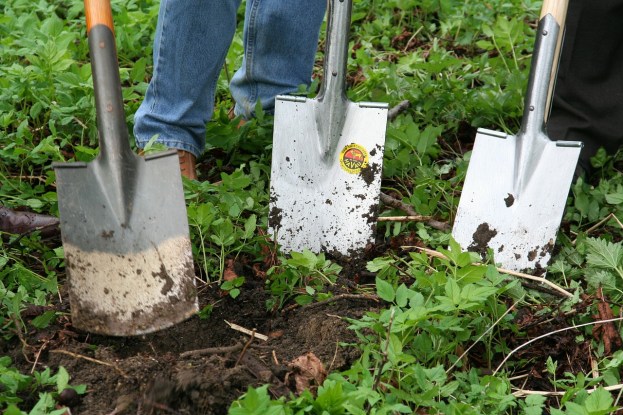
Dragoncello does not need much maintenance. However, Zappatura and weeding is necessary from time to time.
As for the size of the Dragoncello, The end of autumn is the time favorable to cutting the stems. The ideal size is made a few centimeters from the ground.
This will allow a better recovery of the plant the following spring.
In case of extreme cold, it is necessary to cover the tension with straw or death leaves.
latest posts published

Alina island: in agriculture you have to be realistic

On the day of the open doors Saaten Union, in Drajna
The art of direct sowing – Mewi
Finally something simple: Fendone
Horsch in Agritechnica 2019: products created out of respect for nature
Fendt 500 Vario Series – tractors for four seasons
Peak technology for work in viticulture
Valtra celebrates putting intelligent solutions at the center of its development
Rauch Aero GT 60.1 – A single fertilizer distributor: economics, precision, efficiency