
Zucchini is a herbaceous plant plant. Belongs to the Cucurbit family.
He appeared in Italy in the 18th century.
The plant is called «Zucchini» in Germany, Australia, Quebec and the United States. It is called «marrow» in other countries of English distance.
It has large leaves and yellow flowers. The male flowers are sterile, these are female flowers that give fruit for a period of several months. These are smaller than a pumpkin. They are therefore called zucchini in countries of French destruction.
This fruit, generally elongated, looks like a large green or yellow cucumber.
Different varieties of zucchini
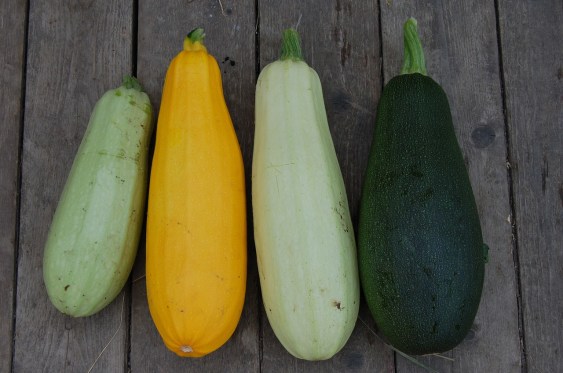
There are different types of zucchini depending on their shape, color and development methods. You can meet the runners, just as there are also no runners. Non -runs zucchini have a short side and grow in height. From a color point of view, there are light green or dark green zucchini just like there are yellows, white or striated.
Among the best known species of zucchini, we can mention among others: The «black beauty», the «Italian green», the «green maraic»And many others.
In France, the «Round of Nice» with round fruits, the «Virginia Blanche», the «Diamond», «Torre», «Goldrush» characterized by its golden yellow fruits and the «Queen of Blacks» are the most popular varieties.
More than 380 varieties of zucchini are identified in Europe.
From a botanical point of view, a courgette is a fruit because it contains the seeds of the plant. However, this fruit, collected very young, long before its maturity, is usually used as vegetables.
Zucchini should be consumed immediately after their harvest. In general, they keep three days in the refrigerator, no longer. They soften and become more and more inherent over time. However, they can be recycled with boiling water for two minutes, then cut in the rings before being frozen.
How to prepare courgettes?

Even affectionately called «Sun Vegetable», the courgettes are now present on the stalls of all seasons and the regions. Usually, June is the best month to taste it. It is highly appreciated by its ease of cuisine and its versatility.
Zucchini can be consumed raw, cooked and for desserts.
– preparations without cooking
Zucchini can be consumed above all as a salad. For better preparation, choose a young, small but heavy fruit, whose peduncle is well attached. You prefer a fruit that has smooth and firm skin without scratches.
If you have difficulty making your choice, you can ask for advice to the market gardener.
For those who live in Nice and in its region, they can choose «trumpets» courgettes, also known as the «violin» courgettes, which is characterized by a thin hazelnut flavor.
In general, young fruits have a better taste. They have a thinner consistency and contain less seeds and water. In addition, young fruits contain less starch, which makes them more digestible.
Zucchini can also be cut into sticks. Therefore, it replaces the cups with trial and highlights the most aromatic tartins.
It can also be cut very finely and act as a vegetarian carpaccio or serve to sprinkle with condiments to vary the flavors and plots with each bite.
As for the cut of this vegetable, some specialists and authors of the books of cooking say that the form of the pieces of zucchini has repercussions on its taste and consistency. The proportion of the skin of the meat and seed has a great impact on the flavor. Therefore, a courgette cut prejudice is strongly suggested. This allows to obtain slices with alternation of skin and meat.
Racce zucchini can also be mixed with fresh ingredients as it is. It can also be associated with richer or even fatter elements in order to bring lightness to the dishes.
Among the good culinary associations that can be made with raw courgettes, you can mention the non -granny smith apple, lemon, duck breast, anchovies, mimamlet, fresh goat cheese, etc.
– Cook zucchini
Under the effect of heat during cooking, the vegetables expect because the cells of the cells soften. The cells lose the waters, the vegetables defla out and lose the volume. Zucchini are no exception to the rule Because it consists of water to 88%.
There are therefore several processes for cooking zucchini.
To obtain the taste and in particular the desired consistency, it belongs to the one that prepares the dish to adapt the cuts, time and cooking power to the desired result.
To get crunchy zocchi, they shouldn't be too cooked. To do this, you have to cut them into quite large pieces and cook them with a grid preferably.
On the contrary, if you want to have a farsa of melting for cannelloni or lasagna, we fry grated or chopped zucchini over fire. This technique allows you to evaporate all the vegetation water from the vegetables.
Water or steam chefs do not provide further courgette taste. For more taste, you can add spices.
To make a leap of courgettes, the latter can be cut into spaghetti with a pelapate. The use of olive oil and roasting in advance in the pan of some spices such as coriander seeds, cumin, fennel, gives a better flavor to the recipe.
For a ratatouille, it is expressly advisable to bring the vegetables separately because each ingredient must maintain their personality. The zucchini flavor is combined with that of other foods when cooking over low heat.
For baking in the oven, it allows you to concentrate the scent of courgettes. In fact, the meat of dry courgettes does all its aroma.
It is necessary to add a little fat ingredients such as ground meat or cheese to produce stuffed zucchini gratin recipes or courgettes. This allows you to amplify the flavors of this delicious dish.
The slices of courgettes brushed with oil can be roasted in the oven at 200orC. In the same way, zucchini fried with Parmesan, breaded in a mixture of eggs, flour, breadcrumbs and grated cheese can also be made in the oven at 200orC.
– Dessert by Chirgette
The grated courgette and pressed dark door as it lightens the cakes. Incorporate in desserts, it partially replaces flour and/or butter.