

The Japanese of the genre, whose scientific name is ErioBotrya JaponicaIt is a fruit tree of the Rosaceae family. It is grown in hot regions for its edible fruit or its leaves that can be used as its herbal tea. It is also used as an ornamental plant.
The Japanese neplier has been cultivated in China for more than two thousand years. In the twelfth century, under the Tang dynasty, it was introduced to Japan by a monk. From there he won southern Asia. In the 17th century, he touched the Mediterranean basin, then America and all of Europe. Then he landed in Australia, India and New Zealand.
In its natural habitat, the plant can become invasive. The Bibassier is grown for its fruits. In temperate regions, it can resist freezing up to less than 110 C. In these areas, the tree is used as an ornamental plant. To develop and produce fruit, he needs heat and sun.
The name of the plant, Bibacier or Bibassier, derives from «Pipà Guo» which means in the Chinese fruits in the shape of a «bat» which is a musical instrument.
Flowering takes place in autumn or at the beginning of winter. The fruits ripen at the end of winter or early spring. These are ovoid -shaped bays, orange yellow or ivory of color.
Very juicy meat has a spicy taste. It also has an orange or white yellowish color. The fruit rich in calcium and vitamin «a» has seeds that have a black brown color. The skin is rich in tannins. The fruits with small or medium -sized seeds come from the best selections.
At the moment, obtaining variety without nucleus is the main problem of this culture.
The fruit is produced on a large scale and marketed in Asia, in the subtropical area of the American continent and also in Israel or Italy.
The different varieties of Japan néflier
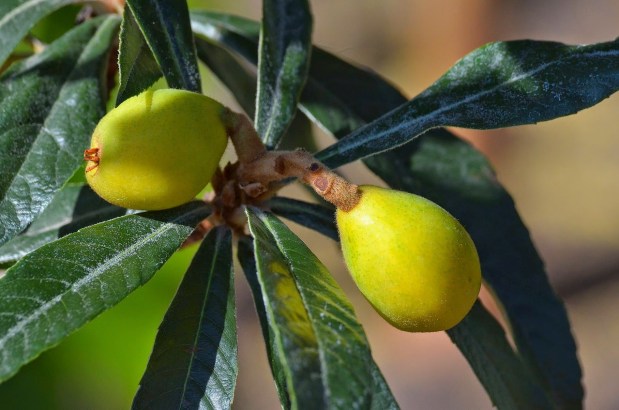
Usually the shape of the plant varies according to the species. In China where she was grown for the first time, There are more than 1,000 varieties. Spain and Japan have only 102 varieties.
The shape of the sheets is used to differentiate the varieties. There are therefore two main groups. These are: the Chinese group and the Japanese group.
- The Chinese group It is represented by thin leaves trees. These give orange pyriform. In general, the Chinese group is early.
- The Japanese group It is characterized by trees with large leaves. The fruits have a pale yellow color and have pear or oval shape.
Each group also has different varieties.
For the Chinese group, the following varieties are identified:
- Lasterré the «faaa», It is a very late variety, resistant to cold. It gives great fruit to the pale meat;
- The «Thales» variety, Also called «Golden Nugget»: it is close to the «Tanaka» variety. It gives pyriform fruits with a soft orange -colored meat. Unlike «Tanaka», this variety is hasty;
- The variety known as «Algeria» or also «Algiers» or «Lindl», The fruits of this variety are sweet but small. It is the most cultivated variety in Andalusia;
- The «plush» variety, Porta di large pale yellow fruit with soft flavor. It is late;
- The «Magdal» variety, It is very hasty but it gives little fruit.
The Japanese group is represented by three main varieties:
- The «early» variety, This variety is characterized by dwarf trees. It is early;
- The «champagne» variety, It's late. It is the most common variety with large fruits;
- The «Early Red» variety, It is the most widespread in the United States. It is an initial variety with orange fruit.
There are also other more or less important varieties. According to the manufacturers, there are Australian, Indian and Egyptian varieties, but also Israeli and Sicilian.
Depending on the maturity of the fruit, we can see:
- The first varieties, including «Golden Nugget», «Advance» ….
- The so -called mid -season varieties, such as «Algeria», «Mammoth» …
- Late varieties, such as «champagne», «plush» …
I use more Ufier in daily life
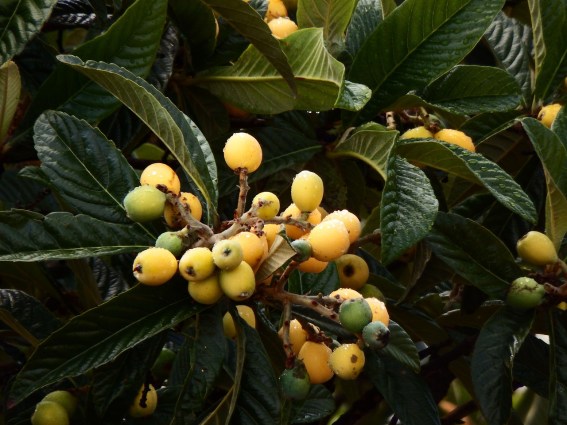
From food to cosmetic products, there are many uses of this plant.
THEThe fruits of the naked Japanese can be eaten fresh, raw or cooked. You can also get drinks, such as syrup, wine and even liqueurs.
Bibassier's largest leaves are used to get excellent tea. It is very popular in China and Japan.
The leaves and flowers of the Japanese néflier also have therapeutic virtues. Dry flowers are used in herbal tea and can also be used as a layout.
In traditional Chinese medicine, foliage is also used to treat wounds and treat respiratory problems related to cough.
The bibassier can be used as a pear holder. So it will give a little robust and late pear.
From its evergreen foliage, the Bibassier is also used as an ornamental plant. In the shade, the leaves are larger than in the sun.
In addition to that, The beautiful Japanese is a kind of honey. The perfumed inflorescences form clusters that fall that give it a very exotic appearance.
Tips for the culture and maintenance of the Japanese Netlaver

The Japanese neplier can multiply to sow. Plants obtained from this technique do not give fruit before 8 or 10 years. The fruiting is late.
As for other multiplication methods, the graft is the most used. We can therefore perform a cattle transplant on a naked municipality, on a cognass or on a hawthorn. Know that the grafted trees produce fruit faster. In fact, they produce it after only two years.
Aerial marking is also recommended and cited as a safe technique, but is considered difficult to reach.
The ideal period for sowing is between mid -August and mid -September. Between each plant, A distance of 4 meters must be respected.
The cultivation of this tree requires well -drained soil exposed to the sun.
After collecting the fruit, it is necessary to perform the size of the trees. The cut every year allows you to ventilate the interior of the tree. The size reduces the tree in height and removes the branches that made themselves in fruit.
To facilitate the harvest, the dimensions in a half -scale cup are the most suitable. To obtain large fruits, It is also necessary to lighten and leave only 2-3 fruits per hand.
In Japan, the bag is accelerated for ripe fruit maturation. This process also allows them to protect them from the birds that love them.