
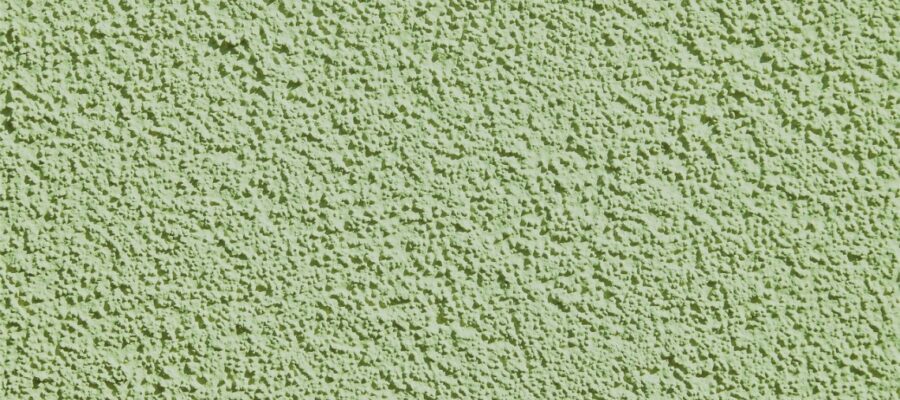
Choosing a facade plaster suitable for wall material is a dangerous thing for those started. The coating is the most used coating in France as it brings a second young man to old houses, protects against bad weather and brings a final touch to the aesthetics of the house.
That it is projected, kept, colorful, we will know what exactly chopped plaster is for.
The presentation of the facade

The term «plaster» designates all the decorative platforms of a grainy nature with thick grains. From a technical point of view, know that Crespo plaster does not support irregularities.
Before positioning it, the wall must be flattened and the coating must not include defects. Therefore, the plaster only stands on a smooth plaster to improve the appearance of the facade. Maybe, you can put the paint smooth on it to have an even more decorative touch.
On the aesthetic side, this external coating is available in various shades. There is white, cream, sand or even gray tones. When you choose the color of the plaster, Refer to the plu (local urban plan) of your city on authorized colors.
Also, if you want to change the original color of the existing plaster, You have to make a declaration of work.
- How to prepare the site?
Start by installing the scaffolding before protecting processing and openings. This equipment should be easily mobile. Protect all the elements that can receive plaster projections. Use the adhesive ribbons for the perimeter of doors and windows and a plastic tarpaulin for the rays and the frame.
To prevent cracks between concrete and bricks, put an armed canvas. Attach it with nails. Remove it after applying the plaster. To avoid round trips, prepare different bands in advance for flat support. Baguette angular perforated for nails with nails and points of acrylic glue. They will serve as a guide for the thickness of the plaster.
Cut the rods to 45 ° using a special sheet metal cessoie and place them at the intersection of two corners. Do not forget to wear protective gloves, because the part of the thread shirt. Disassemble the descents of the gutter.
Experts advise you that you never consider this project when it is too hot or too cold. In fact, under the effect of heat or frost, the coating is crashed or detaches itself a few months after its application. Money and a waste of time will be lost. For a new construction, the plaster must be set a few months after the site finish.
- How is the cleaning of the support?
In any case, you should do the work without cleaning the entire surface to be renewed. It is essential to eliminate homework, dirty or even foam. The holes or cracks must be reconstructed, 5 cm in diameters.
Therefore, there will be no spectrum formation or dark halo under the plaster. In fact, the plaster is very beautiful in nature and cannot hide these defects.
There are a thousand and one ways to clean the external facade. You can use the white vinegar to polish the small dirt. To remove fat stains, use sodium crystals. They are very effective. Pour a cup in a bucket of water and clean the support using a brush.
Avoid the use of bleach at all costsIt is an option that is not ecological at all. Finally, if you have the possibility, High pressure cleaning and hydrism are good alternatives.
How to apply a crushed patch?

The crushed coating should be applied abundantly on a clean surface such as the projected coating. It is necessary to insert 3 layers later with a thickness of 30 mm in all.
To push the coating, professionals use a zip line or even a manual machine that takes on the shape of a small box. The crank allows you to activate the wheel composed of metal and flexible stripes. And the small lever regulates the amount of material projected every turn.
- The application technique to be used
This technique is to regularly move the zip line to a distance of about 50 cm from the wall. Orient the zip line in front of the wall to project the first layer.
For the second, you have to orient the zipline to 45 ° compared to the support. And finally, move horizontally to the right and left so that the projected droplets cling well to the tips.
This provides more volume. Be careful, the chopped plaster should not be applied when the temperature is less than 5 ° C or in case of heat wave.
To obtain an overwhelming finish, Preferably use a plastic or stainless steel taloche. Go directly to the still fresh coating. The ideal is to start from the bottom up and try to maintain an identical movement.
The material necessary to adopt

Here is the list of tools that you will have to apply a crushed plaster:
-Spiccare of adhesive cladding bags for masking
– Protective Tarpaulins
– Tacchette
– nails and screws
– grilled dilation gaskets
– perforated corner baguette
– liquid liquid resin liquid
To do the work, you need, a ribbon meter, a hammer, a garnish, a protective mask, a pair of gloves, a crackling machine or other alternatives, facade tools and scaffolding.
- How to clean the site?
After using the manual machine, You should clean it immediately with care. This prevents the plaster from declining on the tube and on the nozzles. Preferably use a high pressure detergent.
Do not forget to immediately dismantle the scaffolding before the final empire of the plaster. When you leave this material on site, the plaster will become dark and there are traces once removed.
Wait about 3 weeks that the plaster will completely harden.
- The activities of the crushed plaster
The crushed coating also called «Tyrolean plans» provides a regular finish, but with some disparities in the consistency. Easy to apply, protect and decorate the wall where it is applied.
The main advantage of this coating is that it is the least expensive on the market. In addition, the crushed plaster prevents the water from entering, letting the support breathe. You can use it on any wall, even on the stones. It is an excellent thermal and sound insulation.
- The disadvantages of the chopped plaster
The maintenance of the plaster is more or less difficult due to its rusticity. However, a simple paint can give it a new appearance. The crushed coating is sensitive to dirt, even if it is less fragile as the scratched coating.
- An permeable or waterproof product
To avoid the invasion of water vapor, the interior of the building, the plaster must not be too permeable or too waterproof. In addition, it must meet certain standards. It is applied to the trowel, taloche or machine or thyrical depending on its composition.
These various methods require a special ability and a specific tool. Better to make this choice by asking for the advice of a professional's coating professional like a craftsman – facade or a bricklayer. Never neglect the waterproofing aspect. A bad composition chalk or with neglected installation generates significant disorders.
How to choose the crushed coating?

First of all, you have to choose the coating compatible with the nature of the wall: cement, bricks, stones and conditions of this support: old or old.
For the classic version, the plaster must be produced, dose and mixed before the application. As the name suggests, the single -engraved single coating is the application of a single level implemented in one or two steps.
It has the same functions as a traditional multilayer cement. On the new facades, Monocouche has many advantages: execution speed, reduced drying time, diversity of aspects, finishes and colors. However, this shade is not suitable for plaster or raw ground supports.
The color of the crushed coating depends on the aesthetic you want and on the region in which you live. When you want to renew the facade of your home using this form of plaster, permission to the Town Hall is necessary.
- Plaster and facade regulations
Before starting the correct work, it is necessary to take care of all the regulations. It is a real priority. The first approach is to make a declaration of modification of the external appearance of your home. This authorization must be given to the Town Hall. In the event that it requests the services of a specialized company, it takes this phase.
The local urban planning plan (PLU) governed by the administration of the buildings of France and the Municipality can, if necessary, impose a precise color for you. If you live in the north region and want to repair your home using ocher colors, your request could be refused.
The administration inflicts fines or can force your facade forcefully and therefore faces the invoice.
The cost of the crushed plaster

The price of the crushed plaster depends on several criteria, in particular on the realization, the finish, the accessibility to the site and the season. To get an idea of the necessary budget, take the preparatory phase by distinguishing the various techniques used.
Here are favorable indications regarding the price of this type of project. This will help you improve your choice.
The cost of the laying patch is calculated based on the number of square meters to be treated. All the prices mentioned are obtained by dividing the number of square meters of the operation according to the cost of an operation of plaster.
The price range for a simple finishing plaster ranges from 15 to 40 euros. For the finishing of a crushed chalk, prices vary between 15 and 50 euros. On the other hand, the variation is more important if the craftsman taloche le prépi, because the operation is longer and requires specific techniques. In this case, Prices vary between 50 and 60 euros for incorrect finish. Count from 60 to 70 euros for a spread finish.
In addition, the prices indicated above vary according to the city and the construction concerned. In Saint-Étienne, for example, the installation of a plaster in a crushed finish on a fence wall is 15-18 euros per square meter. On the other hand, for a house, the cost starts at 18 euros and can reach 30 euros per square meter.
As for the individual houses in the Rodano-Alpe region, the prices range from 15 to 30 euros per square meter for the facade in rustic projected finish. In nearby regions, the price range varies from 20 to 35 euros per square meter.
- The price of the facade and VAT
The cost of the installation of a patch can benefit from VAT with an intermediate rate of 10 %. Only, the house must have been built for more than 2 years. This preferential rate applies to a main or secondary residence.
- The price of the internal plaster
The internal plaster in imitation or crushed stone is still in some interiors even if it has not been in fashion in recent years. These finishes allow you to have great effects that you find in principle in stores, administrative rooms, in contemporary -style families, etc. Here is a table that specifies the price of an internal plaster.
| Type of internal chalk | Prices on supply and installation by a specialist |
| Rolling | From 30 to 50 euros/m2 |
| Crushed plaster | 40 to 60 euros/m2 |
Noted: The price price includes the protection of the part.
When you project the plaster, use a protective screen so as not to dirty the outside.
You have to work at least two. Ask your panel to keep the panel.
Before putting the plaster, remember to identify holes such as taking or tap constraints.
To get a good crushed finish, leave the first layer for a whole day.