
The elastic or rubber Ficus plant is a plant of Asian origin. Easy to cultivate and decorative with its large shiny leaves, many people use it to dress their residence corner or the rail of the stairs. If you also want to do the same, here is everything you need to know about this beautiful plant: variety, culture, maintenance, …
Some varieties of elastic ficus

It should be emphasized first of all that if the rubber plant is better known in France as a maximum 3 meter apartment, in the Asian jungle, It is a huge tree of the Morachic family, up to 55 meters high.
His trunk is, in this case, most of the time surrounded by aerial roots anchored to the ground so that he can support his branched branches full of shiny dark green leaves.
There are many varieties of rubber. Which allows you to vary the pleasures. The most used are:
- The sturdy elastic ficus: Having large brilliant dark green leaves, the Ficus Elasticha Robusta is one of the most common in the Garden Center.
- Le Ficus Elasticha Schryverian: The contours of his leaf are colorful in white and the foliage around its main rib is dark green.
- Le Ficus Elastica Doescheri: It is recognized with its macchiato leaf with gray green, yellow and white and its central rib of petiole and rose.
- The elastic ficus decorates: Their leaves are creamy white colors in the central and red rib on the contours.
How to grow the rubber?

If there is an easy plant to be successful, it is the rubber plant. Tolerates some errors of culture. However, if you want your Ficus Elasticha to be healthy and grow quickly, you have to give it the necessary treatments.
To do this, plant it in a large pan large where it can extend. Put a good layer of clay balls in the lower part of it to ensure better water drainage. The mixture must be 1/3 of fine cortex, 1/3 of Frank and 1/3 of land of the ground.
Place the pot in a place where the plant can receive as much light as possible, without direct sun. This could, in fact, inflict irremediable burns.
It also avoids exposing it to air currents during the winter and temperatures below 10 ° C. The ideal temperature for its growth is from 10 to 15 ° C. However, it can very well adapt to the temperature of a stay, from 19 to 21 ° C.
How to keep your rubber plant?
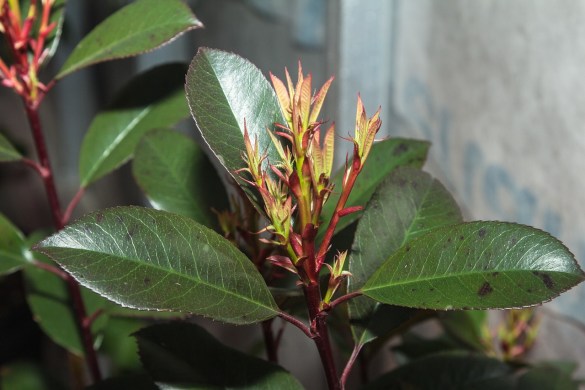
During growth, Ficus Elastica requires two watering per week. On the other hand, this must be limited only to keep the soil wet to avoid rotting the roots. Having said that, let the surface soil dry before watering it again. In case of drop in temperature, the intake of water also decreases leaving the soil intact dry deeper.
In spring and summer, it brings, every three weeks, a fertilizer liquid for the green plant after an abundant watering. You can also replace it with a crushed horn. In this case, the operation must be performed every two months but not every three weeks.
During the winter, it lets the clay balls dry on 2/3 of their height before going around and stopping all the intake of fertilizers.
Anyway, Spray the rubber plant from time to time or place it on a cup full of wet clay to maintain good humidity. Therefore, red spiders will not end.
If you discover that the leaves of your plant need a cleaning shot, clean them with a wet sponge. You can also regularly deny the foliage to promote air humidity. Elastic Ficus fears an excessively dry atmosphere.
Finally, avoid moving it from time to time at all costs because it certainly adapts to various environments, but it will take time. Which will have an impact on its growth.
Size and supply of the rubber plant
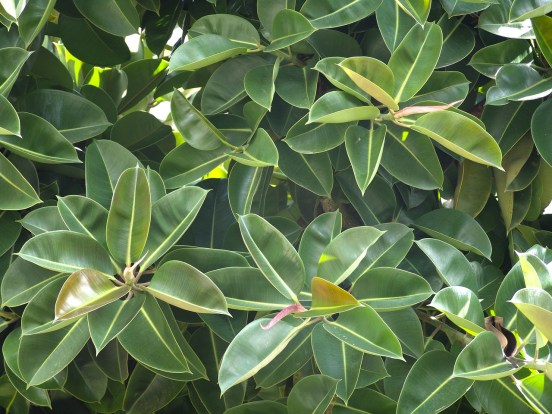
If it is placed in an ideal environment for its growth, elastic Ficus can become very invasive. So you can Cut it one or twice a year to get a dense and more beautiful foliage. The best would be to carry out this task at the end of the summer and at the end of winter. To do this, cut the auction located on a knot. Pinking the upper part of the stem will also have branches from it.
During this operation, the SAP will flow. To cauterize the wound, apply coal, oil gelatin or simply warm water.
When the roots invade the ground, renew the rubber.
Multiplication of the rubber plant
The method The most used is the airline. To do this, you will need a graft, a plastic sheet, the cutting hormone, the foam, the ties, the ground and the sprayer.
Start by making a double circular incision on the stem, on an unlisted area and under the insertion point of an old sheet. Then remove the surface cortex, then cover the naked part of the hormone cut.
Create a sleeve with a 20 cm plastic sheet and fix it a few centimeters at the bottom of the engraving using an attack. Fill it with inhumidnata foam. Next, close plastic in the upper part of the engraving with a second attack.
Keep the foam inside the wet sleeve for 5-6 weeks by pouring some water into the latter at room temperature and non -sopulmin and regularly spraying the foliage so that the water goes down throughout the auction.
After this period of time it will be formed on the stem where you engraved with young roots. Thus remove the sleeve with care and cut the auction that is just below the royalties with the graft. Finally, transplant it into a fertile ground for internal plants.
Diseases encountered in rubber plants
This problem is quite common in this apartment system. We are not talking here about the loss of normal leaves that regularly affect the old leaves, but of the abnormal loss, i.e. the loss of 2/3 of the leaves. This may be due to a change of pot or medium, lack of light or that the roots will bathe in water for too long.
These are the points to control and correct if the rubber leaves fall abnormally. Normally, it should regain the penalty immediately after the removal of these small inconveniences.
- Yellow rubber leaves
It is often the result of a Spider Red attack. As it was said a little higher, A humidity rate must be maintained in elastic ficus to avoid them. And in terms of healing treatment, worn by the yellow of the biological acaricida. Avoid chemicals in order not to damage the leaves even more.
- What if the sheets of your rubber have colored white traces?
It is mainly the result of the work of Cochenillari Fry, parasites to which the tires are very sensitive. To treat your plant, if the tracks have just appeared, remove the congratulated using a cloth soaked in soapted water, alcohol or beer at 90 °, then insert an anti-analdge product.
On the other hand, in the event of a great invasion, we will have to make the infected branches disappear by burning them for example.