

Ibisco is a tropical shrub that is easily identified. It differs from the other plants for its magnificent flowers in bright colors up to 6 cm in diameter. Its 5 funnel -shaped petals Wear colored stamens with yellow antheter.
This plant offers a nice summer flowering and does not require much maintenance. Among the 200 species existing all over the world, only two varieties are very common: the hibiscusAltéa and the hibiscus Sinensis Rosa. Find out under all you need to know about this decorative plant.
Histoire of the Ibisco
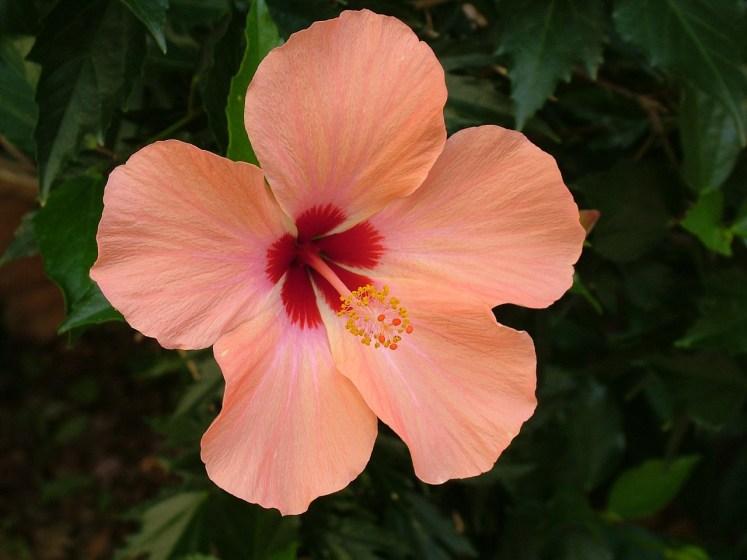
Originally from the temperate regions of the Far East, Ibisco is a shrub that belongs to the Malvaceae family. However, during antiquity, the traces of this plant were found in Asia and Egypt. Therefore, it is quite difficult to really know its exact geographical origin.
This plant has several appellations: «Altéa, Ketmie des Jardins, mauve in tree, tree and pink pink marshmallow». There are almost 200 species and about 30,000 varieties, most of which are more or less rustic plants.
There are only two species that can be cultivated in Europe, i.e. the hibiscus rosa syniensis and the Syriac Ibisco.
Ibisco features

This plant is particularly appreciated for its ease of sowing and maintenance. In fact, it perfectly resists temperatures that can rise to -15 ° C. It stands out for the beauty of its flowers of variable shapes and colors: yellow, white, red, orange, mauve, blue, pink, etc. There are also varieties with two colors.
These are large and measure between 5 and 10 cm. Its leaves are persistent inside. Ibisco can be annual or perennial depending on the variety that you decide to plant. In any case, it adapts very well in a small garden or in a pot.
Ibisco plantation

You want to sow the hibiscus, but you didn't know how to do it. Don't panic, here are the steps to follow to have a garden decorated with this plant.
You can sow in different ways, on the ground, in a tank or in a pot. The hibiscus is planted on the edges of the naves, in a bed of flowers and even in a terrace. Inside, illuminate the isolated part.
The best place would be to put it in full sun. This allows magnificent flowering. This plant also supports the cold. What to avoid is putting it in a place where there is a lot of wind.
The plantation is recommended from October to March. This period is ideal for having narrow and warmer ground. The earth is dispersed and not very sticky. It can be mixed with a compost or an organic fertilizer. Sowing is prohibited during periods of snow and frost.
Ibisco loves rich, fresh and well drained soils. Also appreciates limestone land. If your land is clay, you have to add special ground or compost so that it softens.
This will allow water to evacuate more. For sandy floors, put on the top of the earth to give more structure. This facilitates the rooting of the plant.
Ibisco requires a large amount of water, especially if it is grown in a pot and during flowering. The earth dries very quickly and its needs are specific. It is really important to water it during the first year after sowing (in spring and summer).
However, he doesn't like having wet feet. Let the earth dry between 2 irrigation so as not to flood the roots. One or two watering a week is more than enough.
In autumn and winter, Ibisco enters vegetative rest like all other plants. It is necessary to reduce irrigation in order to adapt them to room temperature. The more cool, the less water needs.
During the growth period, fertilization is necessary. Add the usual fertilizer for flowering plants once a week. Follow the instructions established by the manufacturer. Preferably, choose the fertilizer or organic compost. In this way, your shrub has thrived very well.
The perfect time to join the fertilizer on the ground is in spring. You can also put horn scratches. These two types of compost transmit nutrients to the earth at the level of the roots. He no longer punches the ground after flowering since September. Give a break during the winter.
Ibisco can resist a generous cut on condition that you do it in spring or October. You can cut it up to 15 cm depending on the size you want or a little.
Remove all the twigs that hinder the growth of flowers. Cut them just on a bud. The more it cuts your plant, the more flowers and shoot it forms.
The flowering of the ibisco spreads from March to October. It gives rather exotic flowers and shiny colors. Unfortunately, this beauty is ephemeral and lasts only a few days. But the flowers are quickly and often renewed.
How to plant a hibiscus in vase?

Like all other plants, the hibiscus can also be planted in a pot on a terrace or balcony. You just have to monitor its size. Easier, Choose a pot of earth from at least 60 to 80 liters.
This container can accumulate humidity and free it during dry seasons. Reserve vases for water are also a good alternative. Those who are in plastic are as the last resource. Avoid taking too high vases, they can fall when the wind blows strongly.
In any case, make sure that the container has water drainage. If there is not, do it alone. To start, put a layer of clay balls from 5 to 10 cm in the lower part of the pot.
In this way, the roots will not be in contact with the stagnant humidity. Then place a geotassile movie about it so as not to mix the earth with clay balls. Arrange the soil of the plantations. If you want, you can also mix the earth from the garden and the ground of the plantations.
In the event that you only put fresh soil, incorporate the fertilizer at the same time. Use the usual fertilizers. Complete by filling the sides, dabbing and watering abundantly. You can put the mulch on the surface.
- The essential points to be respected during sowing
– The land must be well furnished.
– The excavated hole must be larger than the clode.
– Mix the sand with the ground if necessary.
– Put a layer of drainage in case the ground is very heavy.
– Replace the compost with horn scrapers.
– Intense the plant after sowing.
- How is the plantation in the ground?
The process is identical to all Ibisco varieties. To start, dip the plant in a water tank for a few minutes until you discover that there are no more bubbles that come out. During this free time, dig a hole at least 3 times the volume of the Motte. Take only half of the land that you go out.
Press the tutor in the non -refined soil and then have a layer of gravel of about 5 cm. Put half of the compost or invading soil to obtain perfect drainage.
If your floor is scarce, you can add fertilizers of the type of horse manure, crushed horn, brown gold. These organic fertilizers have a continuous diffusion.
Place some land/fertilizer/mixture of the earth on the gravel. Then place your plant and first refute the sides with excess. Cut the earth with your feet to see if it is missing or not.
Finally, sprinkle in abundance. As in pot pot, you can also add a mineral or organic mulch. This coating maintains humidity in the ground, in case of drought and wind. Avoid the growth of weeds.
Illnesses

In principle, a well -treated hibiscus is resistant in the face of diseases. But some weather conditions lead to many problems, especially for plants sown outside. Here are some common diseases that can reach this shrub.
- Speaker of the leaves
From time to time, the hibiscus can suffer from thickening of the leaves. The origin of this phenomenon is still indefinable. To remedy, just place the pot in another place.
- Leaves that fall abnormally
It is the manifestation of excess water. Because of this, We have to wait for the earth to be completely dry on the surface between the 2 irrigation. Also avoid cold air currents and sudden temperature variations.
This phenomenon is connected to the air too dry. Never put your plant near a too sunny window or a radiator. Place it on a pebble or clayey balls slightly covered with water.
- Leaves that tend to dry
Here, the leaves change their position and turn towards the inside. It is often due to excess heat or a strong sun exposure. To do this, you have to crog in the tank top in non -limestone water.
This disease commonly reaches the hibiscus. The speech of the leaves gradually and have seen yellow. Chlorophyll is missing and its ribs are visible to the naked eye. Photosynthesis is difficult and can have 3 causes.
| Problems of appointments | Appropriate solutions |
| The pH is not suitable at all | Perform a soil analysis. Add football for too acidic soils or add land to neutral pH. Put the peat for the too basic floors. |
| Lack of mineral elements in the ground | For Chlorosis Ferrica, bring iron sulphate. For lack of nitrogen, put the dry blood. |
| Floor with water postcard | Move in the autumn and drain the floor as much as possible using the gravel in the lower part. Lick with the ground. |
Ibisco can also be attacked by parasites. Find out under how to fight them.
A jet of water is enough to take most of these small animals. Use the tip of the irrigation tube. For plants inside, flood the plant completely in the tub.
The use of black liquid soap is also recommended. It is an ecological tip. To do this, dilute a spoonful of this product in a liter of water. Take it on the interested leaves.
Known under the name «Aleurodes», the white flies cause the total appearance and drying of the leaves. In general, they are on the lower side of the leaves.
The upper part, on the other hand, is covered by an unpleasant sticky substance. To avoid this type of cataclysm, the Ibisco needs a well -ventilated place with a fairly low humidity of the air. In case of excessive invasion, it is possible to use insect traps.
Like white flies, small red mites are located under the leaves. To eliminate them, you will need acaricide. You will find them in special gardening stores. Follow the user manual immensely.
Examples of internal ibisco

Among the great varieties of internal Ibisco, here are two varieties that will illuminate your home.
The hibiscus Sabdariffa Also called «Acetosa della Guinea», this species must be planted in a tank. It provides abundant flowering throughout the year. Its large corolles are available in dark red while the petals delimited by roses are yellow. It is the fruit of the ibisco SabdariffaWhich is dried and therefore infused to prepare an antiseptic and diuretic drink.
The hibiscus Sinensis Rosa It is the emblem of Malaysia. This plant also produces flowering all year round on condition that the rules of culture are respected. It is characterized by large flowers of red, pink, yellow, cream, orange. They are ephemeral because they last one day. You can grow it outdoors and also in winter if you live in a Mediterranean climatic country.